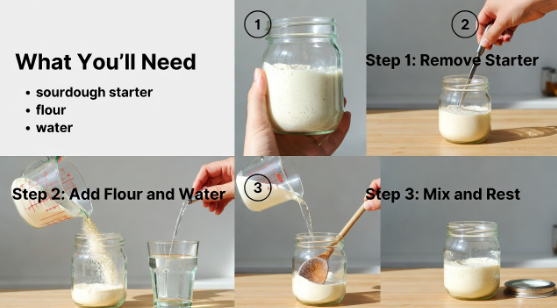
Learning how to feed sourdough starter can feel confusing at first. I remember staring at my jar, unsure if I was doing it right. The good news is that feeding a sourdough starter is simple once you understand the basics. A starter is just flour, water, and time working together. When you feed it, you are giving it fresh food so it can stay alive and strong.
This guide is written for complete beginners. I use easy words, short sentences, and clear steps. You do not need special tools or years of baking experience. I will share practical tips I learned from real baking mistakes. You will also learn what a healthy starter looks like and how often to feed it.
By the end, you will feel confident knowing how to feed sourdough starter correctly. You will also know how to fix common problems and avoid wasting flour. Let’s start with the basics.
What Is a Sourdough Starter and Why Feeding Matters
A sourdough starter is a living mixture of flour and water. Inside it are wild yeast and good bacteria. These tiny helpers make bread rise and give it a mild sour taste. Feeding keeps these microbes active and balanced.
When you do not feed your starter, the yeast runs out of food. The starter becomes weak and sour. Over time, it may stop rising bread at all. Feeding gives it fresh flour for energy and water to stay hydrated.
Understanding how to feed sourdough starter helps you control flavor and strength. A well-fed starter smells fresh and slightly tangy. It grows in size after feeding. It also makes bread lighter and tastier.
I learned this lesson early. I once skipped feeding for several days. My bread came out dense and flat. After regular feeding, the difference was clear. Feeding is not optional. It is essential for success.
When to Feed Sourdough Starter for Best Results
Timing matters when learning how to feed sourdough starter. Most starters do well with regular feeding. The schedule depends on how you store it.
If your starter stays at room temperature, feed it once every 12 to 24 hours. This keeps it active and ready to bake. Warm kitchens may need more frequent feeding. Cooler rooms may need less.
If you store your starter in the fridge, feed it once a week. Cold slows yeast activity. Weekly feeding is enough to keep it alive.
I like feeding mine in the morning. This helps me watch how it grows during the day. You can choose any time that fits your routine. Consistency matters more than the exact hour.
Always feed when the starter looks flat or smells strong. These signs mean it is hungry. Regular timing builds a healthy habit and a reliable starter.
Ingredients Needed to Feed Sourdough Starter
You only need two ingredients to feed a starter. This is what makes sourdough so simple and beautiful.
First, you need flour. Most bakers use all-purpose flour. Bread flour also works well. Whole wheat flour adds strength but ferments faster.
Second, you need water. Use clean, room-temperature water. If your tap water has strong chlorine, filtered water is better.
That’s it. No sugar. No yeast. No special additives. Feeding is about simplicity.
Knowing how to feed sourdough starter does not require expensive tools. A spoon, a jar, and a scale or measuring cup are enough. I prefer a scale for accuracy, but cups work for beginners.
Using the same flour each time helps keep results stable. Once you are comfortable, you can experiment with blends. Start simple and grow from there.
The Basic Ratio for Feeding Sourdough Starter
The most common feeding ratio is 1:1:1. This means equal parts starter, flour, and water by weight.
For example, use 50 grams of starter. Add 50 grams of flour. Add 50 grams of water. Mix well.
This ratio keeps the starter balanced. It is easy to remember and works for most home bakers.
Understanding how to feed sourdough starter includes knowing when to adjust ratios. If your starter smells very sour, add more flour and water. If it rises too fast and collapses, feed more often.
When I started, I kept changing ratios. This caused confusion. Once I stuck to 1:1:1, everything improved. Consistency builds strength.
Always mix until no dry flour remains. The texture should look like thick pancake batter.
Step-by-Step: How to Feed Sourdough Starter Correctly

Let’s break down how to feed sourdough starter into clear steps anyone can follow.
First, remove some starter. Discard about half. This keeps the jar from overflowing.
Second, add fresh flour and water. Use your chosen ratio. Stir well.
Third, scrape down the sides of the jar. This helps you see how much it rises.
Fourth, loosely cover the jar. Air can enter, but bugs stay out.
Place the jar in a warm spot. Avoid direct sunlight. Wait and watch.
Within a few hours, the starter should bubble and grow. This shows healthy fermentation.
I mark the jar with a rubber band. This helps track growth. It is a simple trick that works.
Following these steps builds confidence. Feeding becomes routine, not stressful.
Signs Your Sourdough Starter Is Healthy After Feeding
A healthy starter shows clear signs after feeding. Learning these signs helps you master how to feed sourdough starter.
First, it rises. It should double in size within 4 to 8 hours. Timing depends on temperature.
Second, it smells pleasant. A mild sour or yeasty smell is normal. Sharp or rotten smells mean trouble.
Third, it bubbles. Look for small and large bubbles on the surface and sides.
Fourth, the texture looks airy, not watery or stiff.
When my starter reached this stage, my bread improved instantly. The dough rose better. The crumb looked lighter.
If your starter shows these signs, your feeding method works. Keep doing what you are doing.
Common Mistakes When Feeding Sourdough Starter
Many beginners struggle because of small mistakes. Avoiding them makes how to feed sourdough starter much easier.
One mistake is skipping discards. This weakens the starter over time.
Another mistake is using cold water. This slows fermentation.
Overfeeding is also common. Too much food too often can dilute yeast.
Inconsistent timing causes problems. Try to feed around the same time each day.
I made all these mistakes early on. Each one taught me something valuable. Baking is learning by doing.
Remember, sourdough is forgiving. Mistakes are part of the journey.
How Temperature Affects Feeding Sourdough Starter
Temperature plays a big role in how to feed sourdough starter. Warm environments speed up fermentation. Cold ones slow it down.
At 75°F to 80°F, starters grow quickly. You may need more frequent feeding.
Below 65°F, growth slows. Feed less often or use warmer water.
In winter, I place my starter near the oven. In summer, I keep it away from heat.
Watching how your starter reacts helps you adjust feeding. There is no single perfect temperature. Balance is key.
Feeding Sourdough Starter Before Baking
Before baking, your starter needs extra care. Feeding at the right time ensures strong rise.
Feed the starter 4 to 8 hours before baking. Use it when it is at peak height.
This timing is critical in how to feed sourdough starter for baking success.
A starter at peak activity gives the best oven spring. The dough rises evenly.
I always plan baking around feeding time. This simple habit changed my results.
How to Store Sourdough Starter Between Feedings
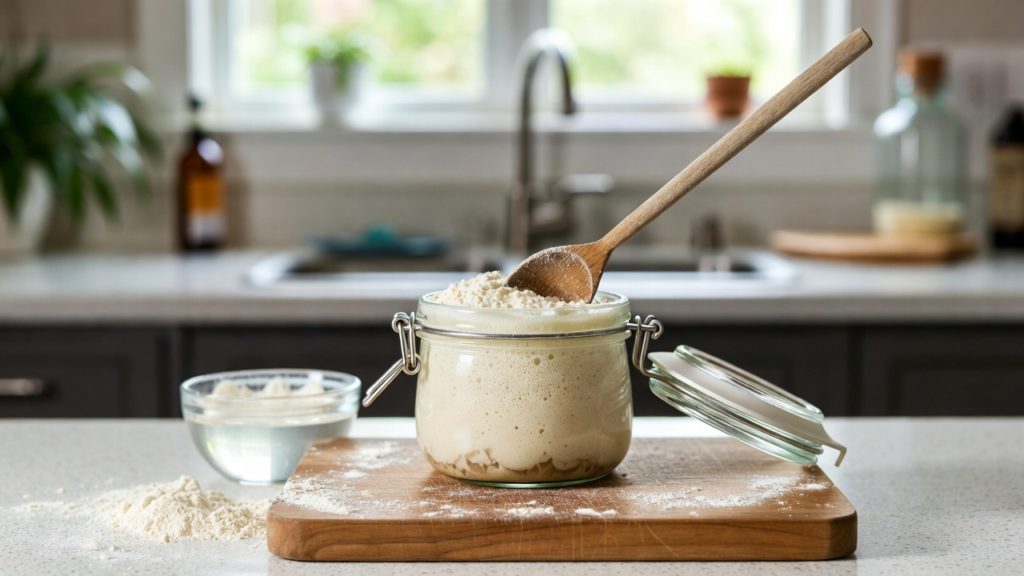
Storage affects feeding needs. Room temperature starters need daily feeding.
Fridge storage slows activity. Feed once weekly.
Always feed before storing long-term. This keeps microbes alive.
Understanding storage helps you manage how to feed sourdough starter without stress.
FAQs
How often should I feed sourdough starter?
Feed daily at room temperature. Feed weekly if refrigerated.
Can I feed sourdough starter with different flour?
Yes. Whole wheat adds strength. All-purpose is easiest.
Why do I have to discard starter before feeding?
Discarding keeps the starter balanced and active.
Can I use tap water to feed starter?
Yes, if chlorine is low. Filtered water is safer.
What if I forget to feed my starter?
Feed it as soon as possible. It usually recovers.
How long after feeding can I bake?
Bake when the starter doubles and looks bubbly.
Conclusion
Learning how to feed sourdough starter is the foundation of great sourdough bread. It does not need to be hard or confusing. With simple steps, regular timing, and patience, anyone can succeed.
I encourage you to treat your starter like a living partner. Watch it. Smell it. Learn from it. Over time, feeding becomes second nature.